



Why Autumn Planting Often Gets Better Results
Seasonal Guidance
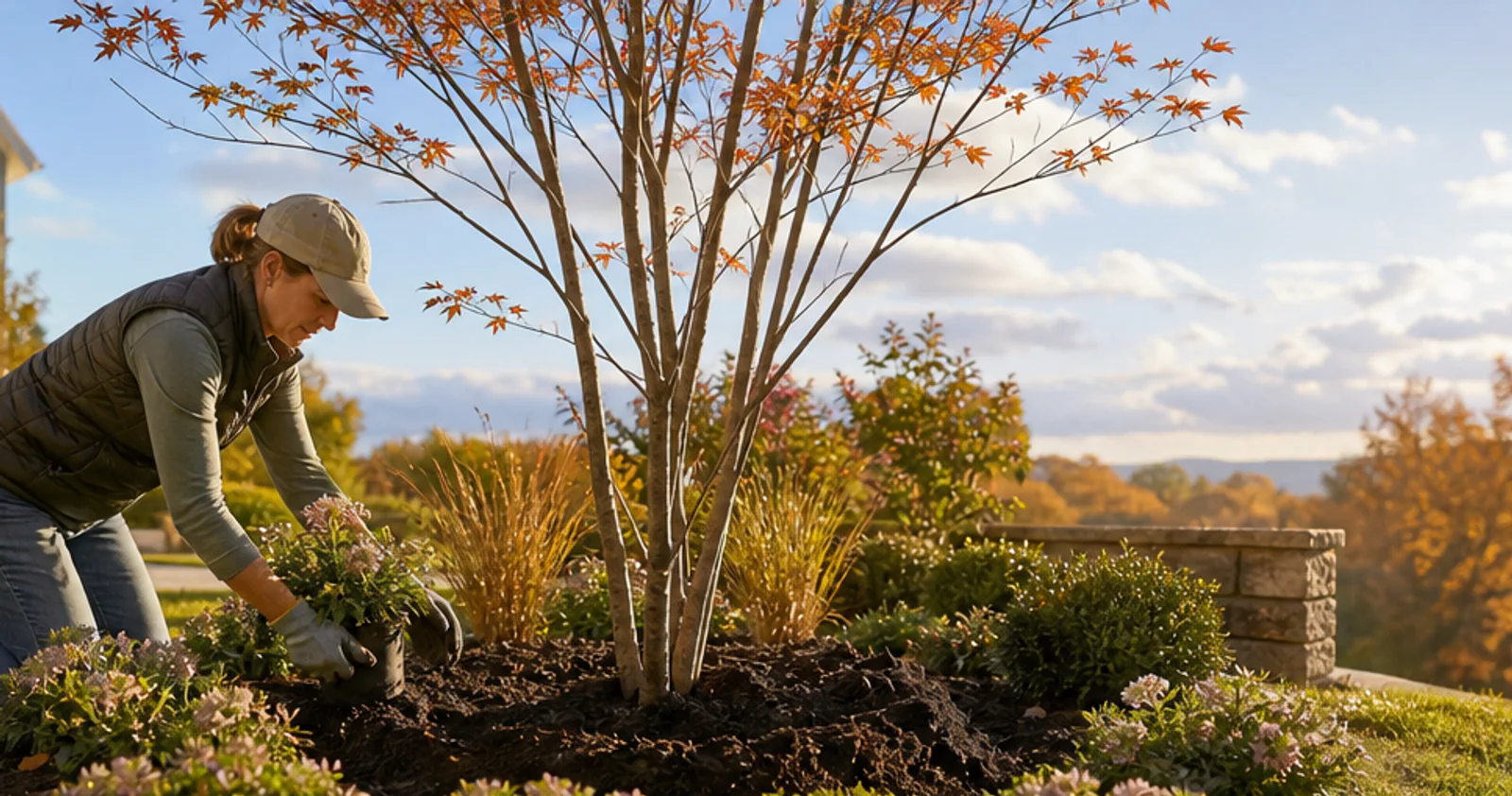
Spring gets most of the attention, but autumn can be a more forgiving planting season. The air is cooler, the soil often holds warmth, and evaporation slows. Many trees, shrubs, and hardy perennials can begin root growth without having to support a full flush of new leaves at the same time.
Use the season, not a fixed date
Autumn conditions vary. Plant while the soil is workable and before prolonged freezing or saturated weather. In mild areas, the window may be long. In colder or wetter places, it can close quickly. Local knowledge matters more than a date printed on a national calendar.

Prepare for roots
Dig a broad planting area and keep the root flare of trees visible at the finished level. Tease out circling roots where appropriate, backfill with the site soil, and water thoroughly to settle gaps. A support stake is useful only when the plant genuinely needs it, and ties should allow slight movement.
Water during dry autumn weather
Mulch the root zone but keep mulch off stems and trunks
Delay tender or borderline plants until a safer season
Mark dormant perennials so they are not disturbed
Check new planting after winter heave or heavy rain
Plan for the first summer
Autumn planting does not remove the establishment period. Roots still need consistent moisture when growth resumes, especially during the first warm season. Build a watering plan before summer arrives. Deep, measured watering is more useful than frequent splashing at the surface.
The advantage of autumn is time. Plants can settle into the soil before heat asks more of them. When species, timing, and aftercare suit the site, that quieter start often produces a steadier garden the following year.
Share it

Words by
Stefanie
More Insights


Example@email.com
000 234 2356 66
Take your Lawn to Next Level
© 2026 Grova. All rights reserved.