



A Small Garden Needs One Clear Idea
Garden Planning
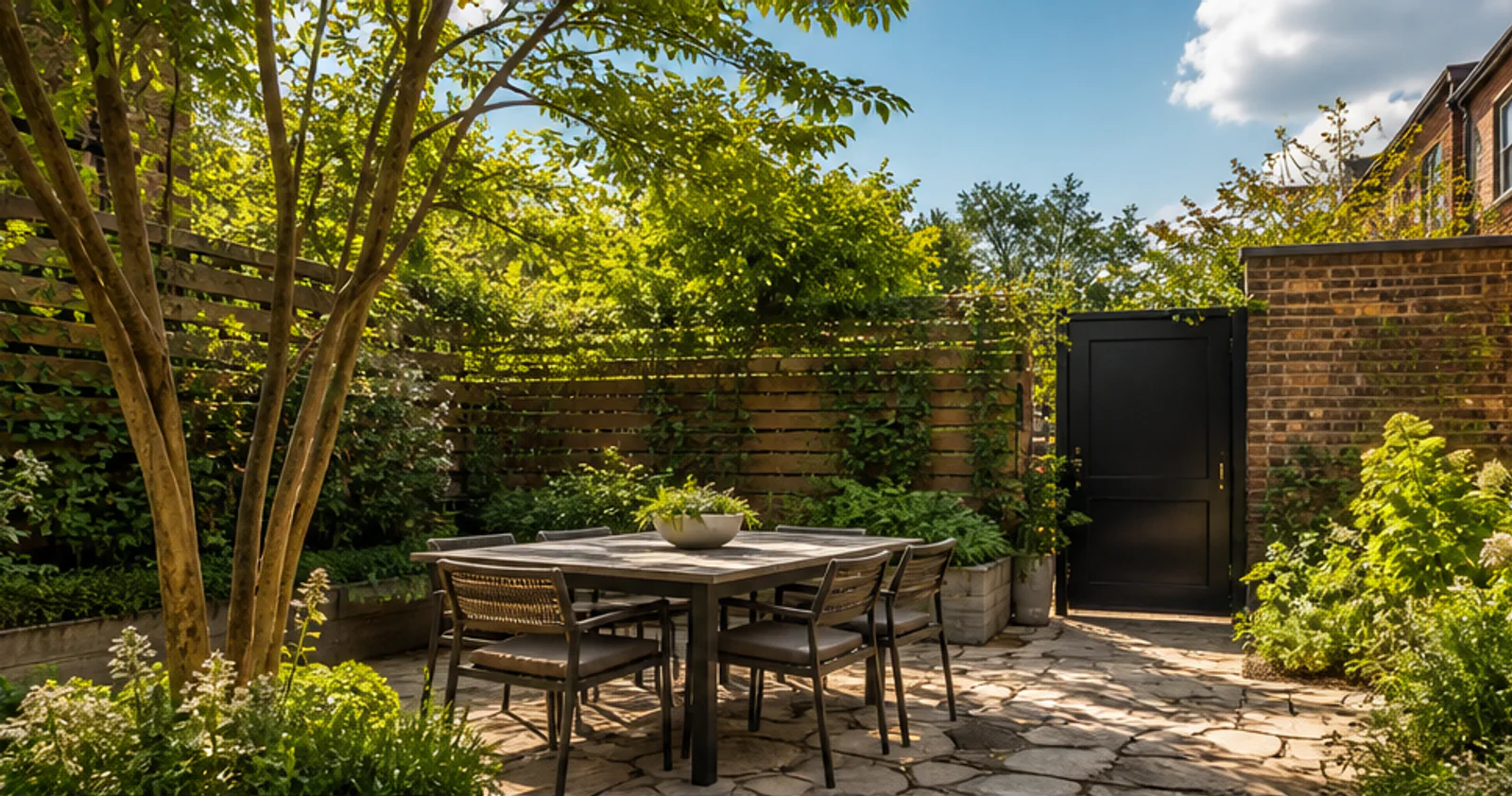
A small garden quickly becomes crowded on paper. There is room for a table, a tree, a shed, a grill, a path, and several planting beds, but fitting every request at minimum size can make the finished space feel smaller. A better plan decides what the garden is mainly for and gives that use enough room to feel comfortable.
Choose the main destination
The primary destination might be a dining terrace, a sheltered bench, or an open patch for children. Make it generous enough to work before arranging anything around it. Furniture needs space for chairs to move. A bench needs a view. A play area needs a clear route from the house.

Keep circulation simple
Every extra path divides the ground into smaller pieces. In many compact gardens, one clear route is enough. Let it widen where people pause and narrow where planting can brush gently against the edge. A slight change in direction can hide the end of the garden and create depth without turning the route into a maze.
Use one paving family rather than several competing materials
Repeat a small group of plants across the space
Choose vertical growth where floor area is limited
Leave a few quiet surfaces without decoration
Plant for layers, not quantity
One small tree can provide canopy, privacy, and seasonal change. Climbers can soften boundaries without taking much ground. Beneath them, a restrained mix of shrubs, perennials, and groundcover gives the eye a continuous scene. Repetition matters more than the number of varieties.
Compact gardens reward editing. When the main use, route, and planting structure are clear, the space feels deliberate. The garden may be small, but it does not need to feel apologetic.
Share it

Words by
Stefanie
More Insights


Example@email.com
000 234 2356 66
Take your Lawn to Next Level
© 2026 Grova. All rights reserved.