



Choose Patio Materials for Real Life, Not the Sample Board
Garden Planning
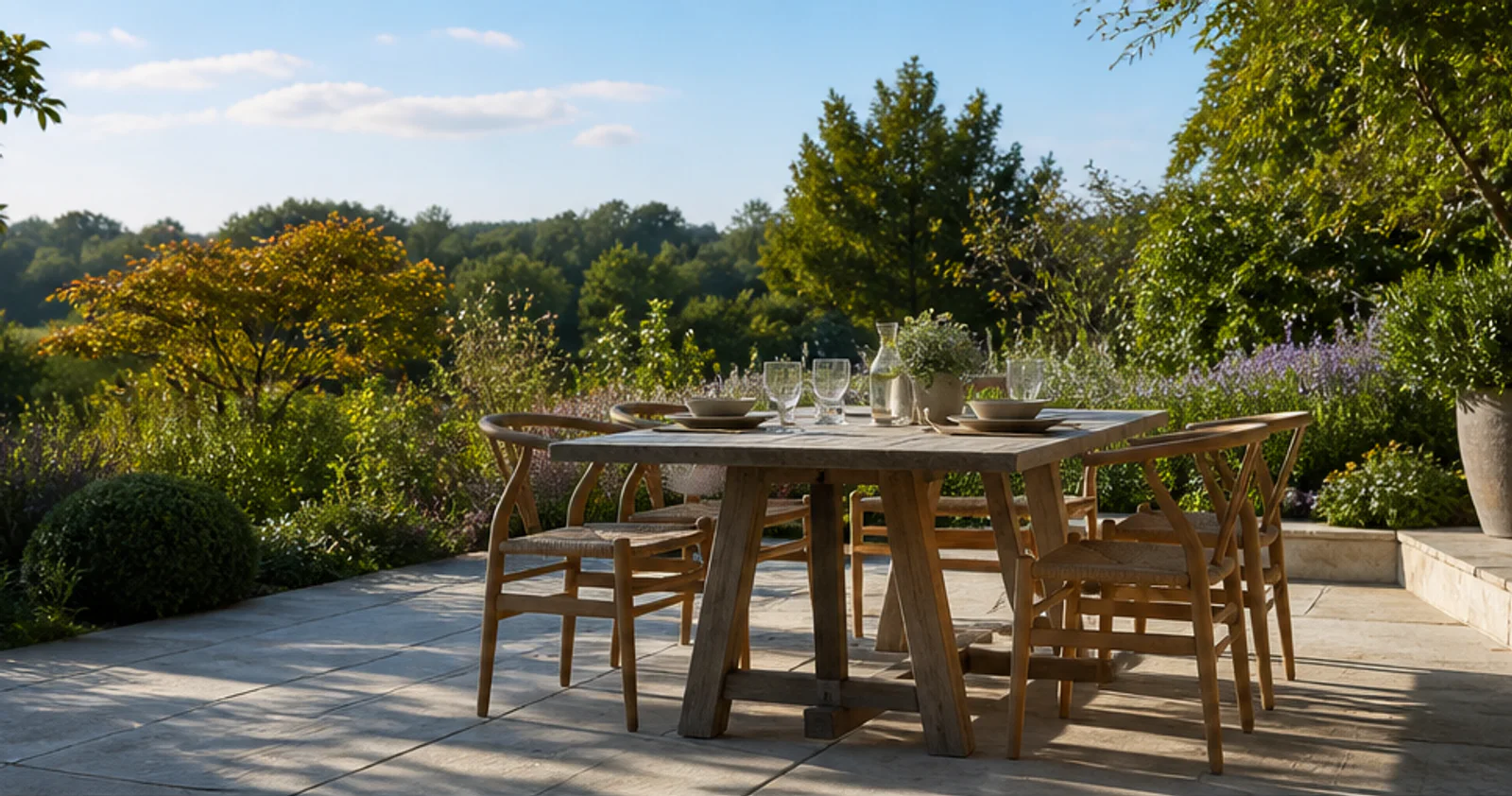
A patio sample is clean, dry, and small enough to hold in one hand. The finished surface will sit outside through weather, furniture movement, cooking, muddy shoes, and regular cleaning. Choose the material for that life, not only for the way it looks under showroom lighting.
Begin with use
Dining areas need stable chairs and a surface that can be cleaned without drama. A path may benefit from texture and a smaller module that follows curves. Gravel can work well in secondary areas but may be frustrating beneath dining furniture. Timber feels warm underfoot, though it asks for thoughtful detailing and maintenance.

Look at the material outdoors
Take samples into direct sun and shade. Wet them. Place them beside the house and the main planting colors. Pale stone may glare in strong light, while a dark surface can hold heat. Some materials change character when wet, which can be an advantage or a surprise depending on the setting.
Check slip resistance for wet routes
Ask how joints and edges will be finished
Confirm the base construction, not only the surface
Allow for drainage and nearby thresholds
Consider how repairs will look in several years
Use fewer materials with more confidence
A patio, path, step, and wall do not each need a separate finish. Repeating one main material and using a second as a quiet complement usually creates a more settled garden. Variation can come from module size, laying direction, joint width, or the way planting meets the edge.
Good hardscape should age without making the whole garden feel tired. A considered material choice supports daily use first, then lets weather and planting add character over time.
Share it

Words by
Stefanie
More Insights


Example@email.com
000 234 2356 66
Take your Lawn to Next Level
© 2026 Grova. All rights reserved.