



A Pollinator Garden Can Still Look Composed
Planting & Biodiversity
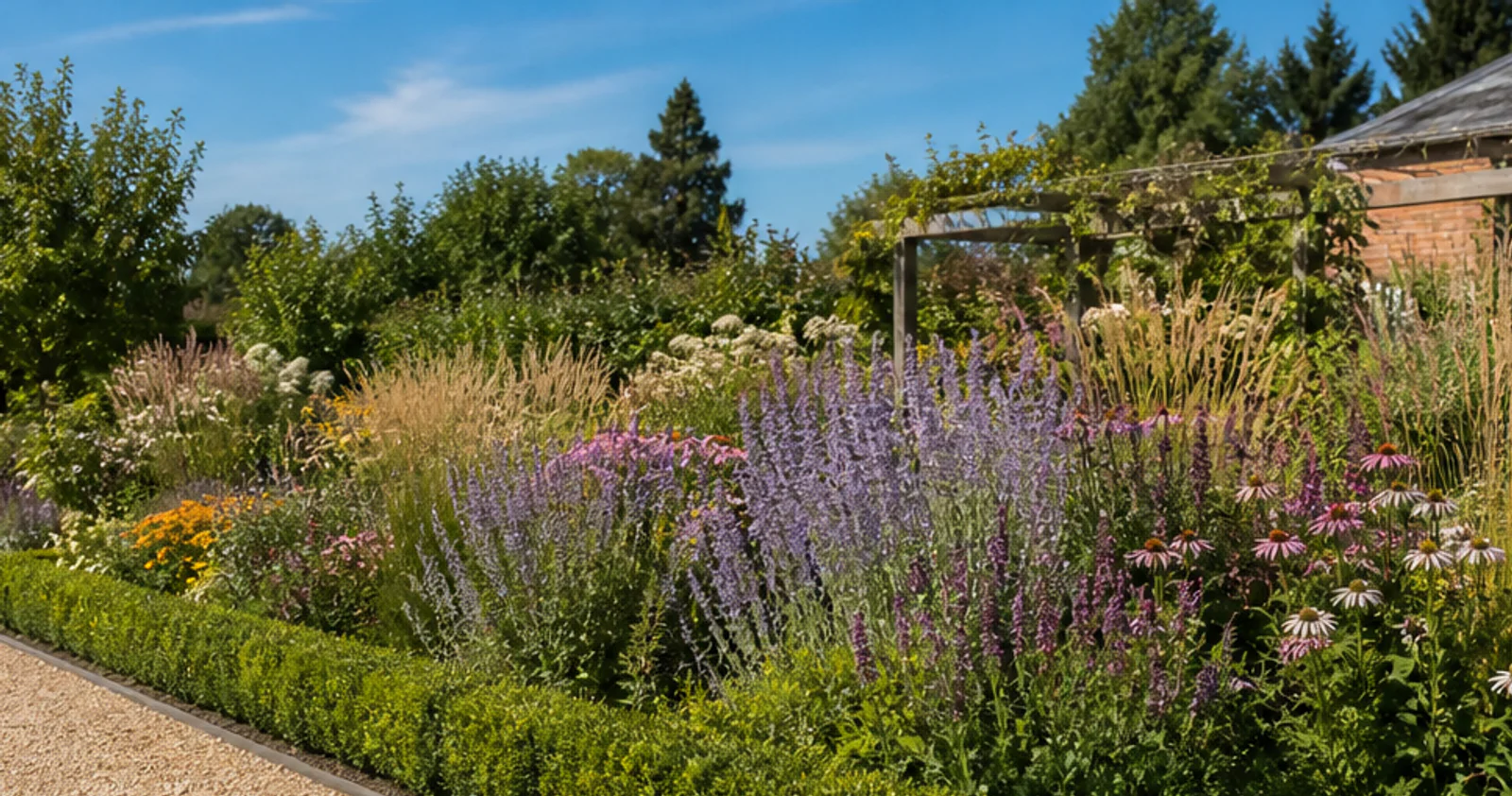
Pollinator planting often becomes a false choice between wildlife value and a tidy garden. It does not need to be. Insects respond to flowers, shelter, and continuity. People respond to edges, paths, and repetition. A thoughtful plan can provide both.
Give loose planting a firm frame
A clipped low hedge, a mown strip, or a simple gravel path makes a clear boundary. Within that frame, stems can lean and seed heads can remain through winter without making the garden feel forgotten. The contrast is useful: one part shows care, while the planting is allowed to behave naturally.

Plant in visible groups
Single plants scattered through a bed are harder for pollinators to find and harder for people to read. Repeat groups of the same species. Aim for overlapping flowering periods so the garden offers something from early growth through autumn. Include shapes that suit different insects rather than relying on one flower form.
Choose plants that suit the actual soil and light
Avoid double flowers with inaccessible centers
Leave some hollow stems and seed heads through winter
Provide shallow water safely where maintenance allows
Reduce pesticide use and treat problems selectively
Keep structure outside the flowering season
Shrubs, grasses, and a few evergreen forms carry the bed when flowers are quiet. Seed heads catch low light and provide food. Cut back in stages instead of clearing everything on one day. The result is a garden that remains legible while still offering shelter.
Biodiversity is stronger when it is designed into the garden rather than added as a decorative gesture. Start with good conditions, repeat useful plants, and make the edges intentional. The garden will feel cared for because it is.
Share it
Words by
Stefanie
More Insights


Example@email.com
000 234 2356 66
Take your Lawn to Next Level
© 2026 Grova. All rights reserved.